The Groundbreakers podcast series celebrates the lives and work of remarkable women who shaped a changing Ireland. These women didn’t just witness transformation—they were the agents of change.
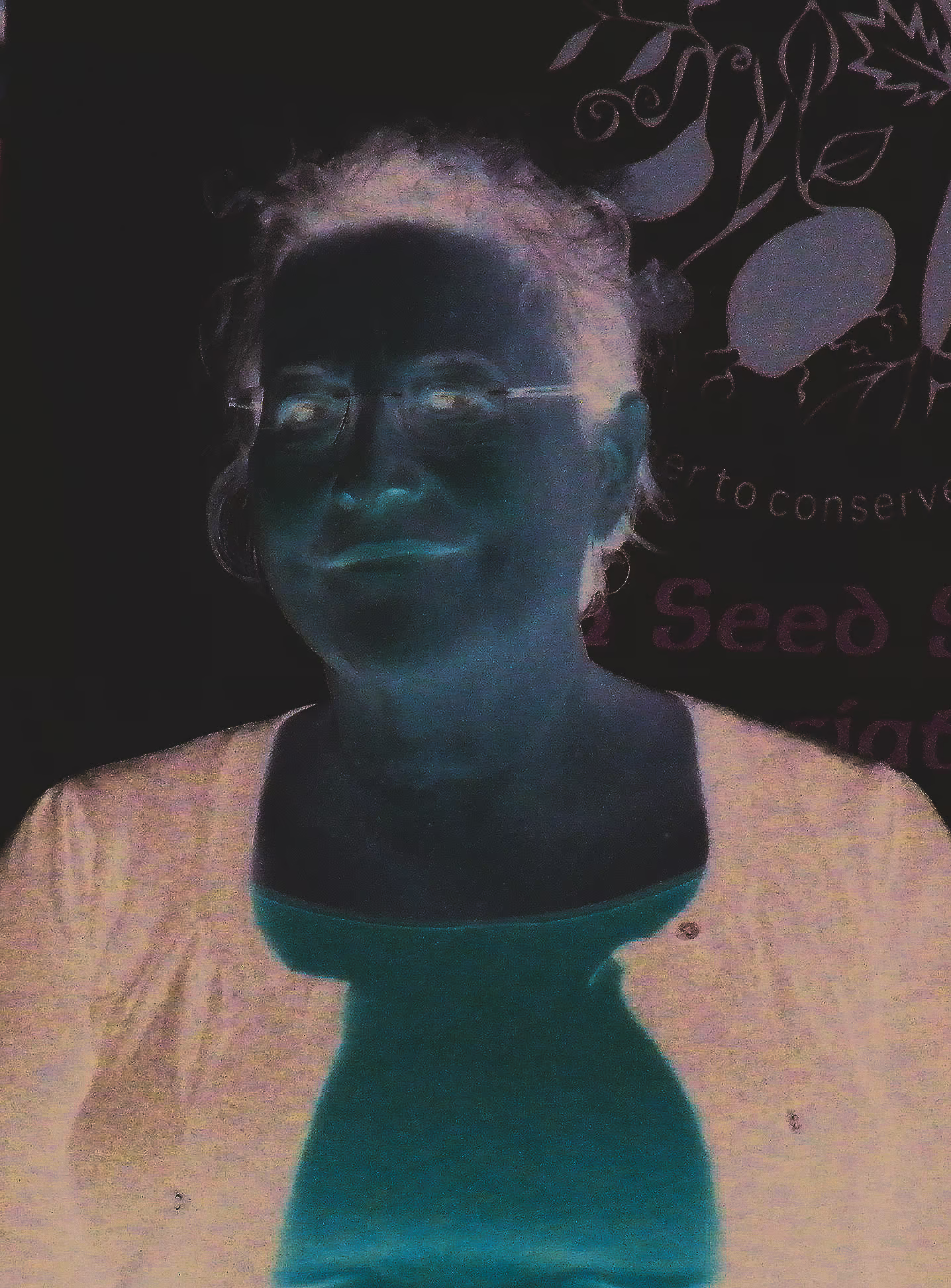
In the episode Groundbreaker: Anita Hayes, the spotlight turns to Anita Hayes, founder of Irish Seed Savers, who has dedicated her life to protecting the genetic diversity of Ireland’s food crops. Her work ensures the preservation of heritage seeds and apple trees and creates a network of Seed Savers across the country, safeguarding our agricultural legacy for future generations.
Anita established Irish Seed Savers in 1991 on a small farm in County Carlow. By 1996, the initiative moved to its current home in Scarriff, County Clare, and in 1997, the project gained further momentum through a FÁS community employment scheme, which secured a permanent site and employment for many staff.
Today, Irish Seed Savers is a vital hub for biodiversity. It houses a seed bank with over 800 rare and endangered vegetable varieties, a native broadleaf woodland, and a wildlife sanctuary that supports a thriving colony of Irish black bees. The organization also holds the national collection of Irish heritage apple trees, boasting over 180 varieties. Uniquely, Irish Seed Savers maintains the world’s largest collection of self-rooting apple trees—33 varieties that propagate without grafting.
The living ark created by Irish Seed Savers ensures that heritage crops adapt and evolve alongside the challenges of climate change, pests, and diseases. Unlike static seed banks, this dynamic cultivation approach strengthens plants to thrive in modern conditions while preserving their rich stories and cultural significance.
Through her pioneering work, Anita Hayes raises critical issues of seed sovereignty and biodiversity, inspiring others to recognize the value of our shared agricultural heritage.
Tune in to learn more about Anita’s groundbreaking journey and the importance of preserving our seeds for the future: Listen to the podcast here.